
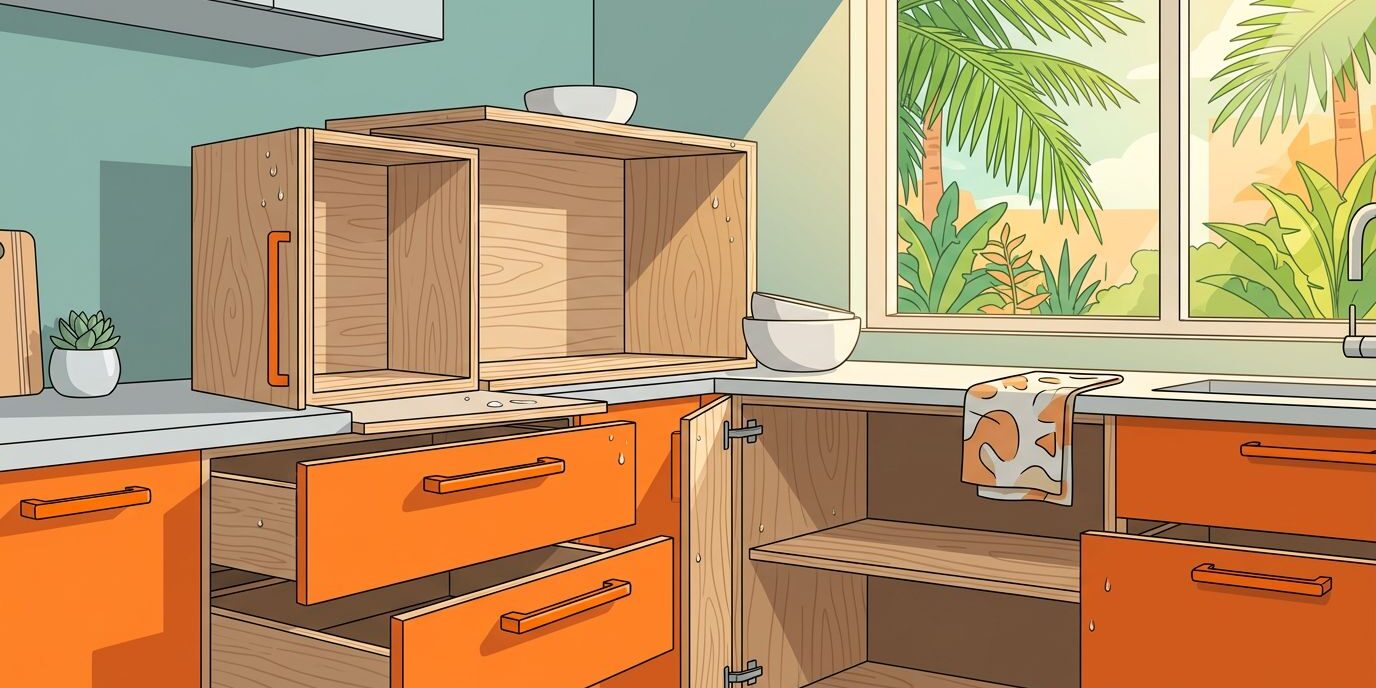
When choosing cabinet materials Florida homeowners need to understand that humidity does not care how pretty your kitchen looks. In this climate, moisture finds weak cabinet edges, cheap cores, and loose joints quickly.
That is why the choice of materials matters more here than it does in drier regions. Whether you are updating kitchen cabinets, bathroom vanities, or laundry room storage in Central Florida, selecting the right material can save you from swelling panels, peeling finishes, and the soft, puffy damage that often goes unnoticed until it is too late.
Key Takeaways
- Prioritize the Cabinet Box: In Florida’s humid climate, the structural material of the cabinet box is more important than the door style. Plywood is the most reliable choice for durability and moisture resistance.
- Avoid Particleboard: Particleboard is highly susceptible to moisture, which causes rapid swelling, sagging, and structural failure, especially in sink bases and laundry rooms.
- Select Materials by Room: Match materials to the specific environment; use wood-based products like MDF for painted kitchen doors, but consider PVC or polymer for high-splash areas like bathrooms and laundry rooms.
- Seal Exposed Edges: Moisture often enters through weak, unsealed edges, so ensure all cabinet components are properly finished to protect against steam and humidity.
Why Florida humidity changes the cabinet decision
A cabinet in Florida deals with more than normal daily use. It deals with steam from showers, wet towels, cooking heat, AC cycling, afternoon storms, and the persistent dampness of a humid climate.
Even if your home feels cool, moisture still works its way into seams and exposed edges. That is where weak materials give up first. The bottom of a sink base cabinet is usually the first victim. Laundry rooms come in right behind it, and bathrooms are not far off.
Condo owners and property managers run into another problem. Empty units can sit closed up for days or weeks. If the air is not moving and the humidity climbs, cabinet materials absorb that moisture, which can negatively impact indoor air quality if lower-grade materials begin to off-gas. In these stagnant conditions, doors may start rubbing and drawers can swell. A small plumbing drip can quickly turn into an entire box replacement.
The biggest mistake is shopping by door style alone. Raised panel, shaker, slab, matte, gloss, wood tone, or painted white, none of these features tell you how the cabinet will hold up over time.
In Florida, the cabinet box matters more than the pretty door.
That does not mean you need industrial looking cabinets. It means the inside structure, often found in high quality custom cabinetry, has to be built for real life in a humid house. Good choices hold their shape better, resist moisture longer, and provide you with enough time to address a leak or spill before significant damage occurs. Bad choices act like a sponge with hinges.
The best cabinet materials for humid Florida homes
When people compare cabinet materials in Florida, one answer rises to the top more often than any other: plywood for the cabinet box.
This quick comparison makes the tradeoffs easier to see.
| Material | Best use | Why it works | Watch-out | | | | | | | Plywood | Cabinet boxes, shelves, vanities, laundry storage | Strong, stable, more moisture-tolerant than particleboard | Not waterproof, leaks still cause damage | | MDF or HDF | Painted doors and drawer fronts | Smooth finish, stays flatter than solid wood in many conditions | Weak if water gets into exposed edges | | Solid wood | Doors, face frames, trim details | Durable, repairable, classic look | Expands and contracts with humidity | | PVC or polymer | Bathrooms, laundry rooms, high-splash areas | Doesn’t absorb water like wood-based panels | Style options can feel more limited | | Laminate | Countertops, cabinet surfaces | Highly durable, easy to clean, non-porous | Can peel if the edge banding fails |
The short version is simple. The box needs toughness, the doors need stability, and the finish needs to seal the whole system.
Plywood cabinet boxes are the safest bet
Plywood is made from thin wood layers pressed together with the grain running in alternating directions. That cross-layer build is what gives it strength and better dimensional stability.
For kitchens and bathroom cabinets, all-plywood boxes are usually the smartest move. They hold screws better than cheaper boards and resist swelling. If a Florida home is going to deal with constant humidity, that extra margin matters. For areas prone to extreme dampness, you might even consider marine-grade plywood, which offers a higher level of protection against moisture.
Look closely, though. Some cabinets are sold as plywood even when only one panel is plywood. Ask what the sides, shelves, back, and bottom are made from. A real plywood box should not turn vague the second you ask questions.
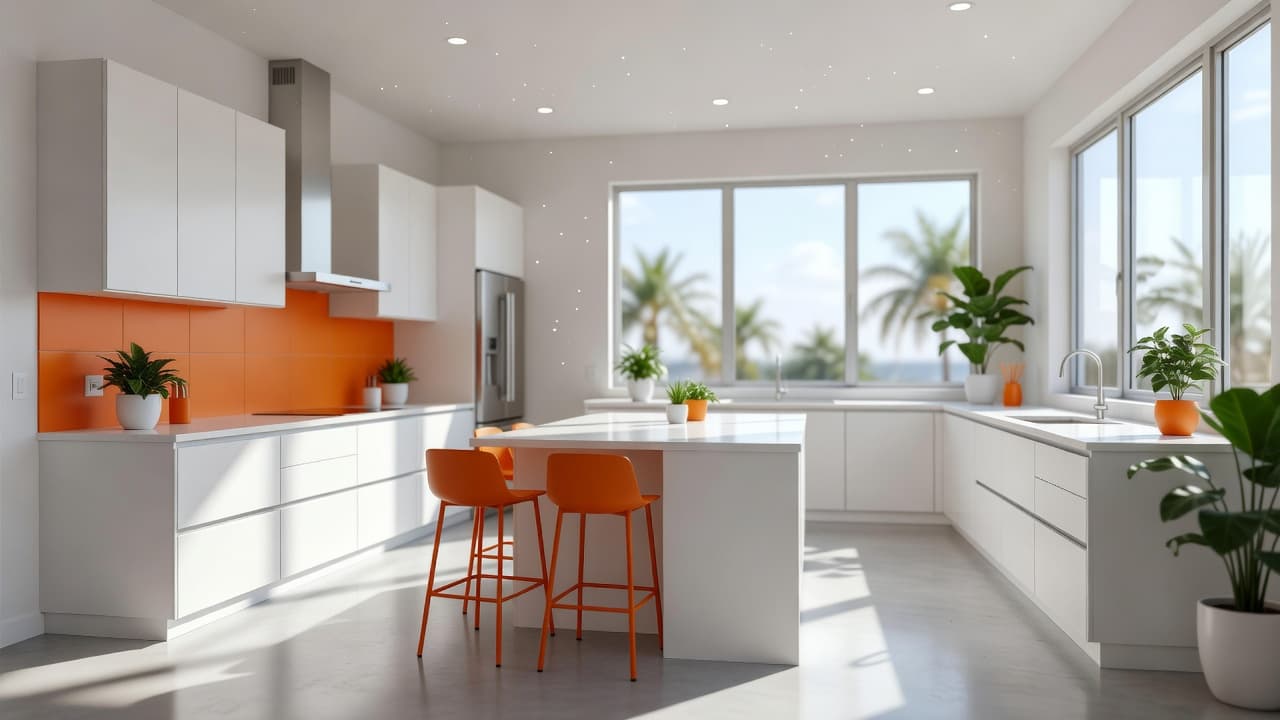
Moisture resistant boxes buy you durability where Florida homes need it most.
Plywood still isn’t waterproof. If a sink line drips for weeks, it will lose that fight. But compared with particleboard, it gives you a much better shot at surviving normal humidity. Whether you are choosing semi-custom cabinets or opting for the sleek look of frameless cabinets, verify the core materials.
MDF and HDF make sense for painted doors
MDF gets lumped in with cheap, flimsy board all the time. That is too broad. A good-quality MDF or HDF door can be a smart choice in humid rooms, especially when you want a smooth painted finish.
Why? Because solid wood moves. That is normal. MDF cabinets often stay flatter, which helps reduce tiny gaps, warped profiles, and paint-line cracking.
The catch is placement. MDF doors and drawer fronts can work well. An unsealed MDF cabinet box under a bathroom sink is a different story. Once water gets into exposed edges, damage can spread fast.
If you want painted cabinetry and clean lines, this is one of the better moisture resistant combinations for Florida homes: plywood boxes with well-finished MDF or HDF doors.
Solid wood still has a place, but not everywhere
Solid wood sounds like the premium answer, and sometimes it is. It looks great, lasts a long time, and can be repaired more easily than some manufactured surfaces.
Still, solid wood responds to moisture. That is the part many buyers miss. In a humid climate, doors and face frames can expand and contract with the seasons. Good construction helps control that movement, but it does not erase it.
Solid wood works best where its strengths show. Think doors, face frames, trim pieces, and design details. For the cabinet box itself, plywood is usually the steadier choice.
If you are comparing estimates and wondering what separates sturdy cabinets from dressed-up weak ones, this guide on how to identify quality kitchen cabinets is a useful gut-check.
PVC or polymer cabinets fit the wettest rooms
Not every space needs a wood-based cabinet. In bathrooms, laundry rooms, and other splash-prone spots, PVC cabinets can make a lot of sense.
These materials do not soak up moisture the way wood fiber products do. That makes them appealing for utility spaces, rental properties, and rooms where cleanup needs to be easy.
There is a tradeoff. Some homeowners do not love the look as much as painted wood or veneer. Design options can also vary by manufacturer. But if your main concern is moisture resistance, this category deserves a serious look.
What to avoid, or at least use carefully
The biggest red flag is particleboard cabinet boxes in humid rooms. Particleboard is cheap, common, and easy to dress up with a nice finish, but it hates moisture. When shopping for RTA cabinets, it is crucial to verify the box material, as many entry-level options rely heavily on particleboard. Once water gets in, this material swells fast. Edges puff up, fasteners loosen, and bottom panels sag. After that, there is not much to save.
A few other weak points deserve caution:
- Thin, poorly sealed edges around sink bases and vanity interiors.
- Stapled backs that feel flimsy when the cabinet racks side to side.
- Cheap thermofoil cabinets placed near ovens, dishwashers, or areas with strong sun exposure.
- Budget lines from cabinet manufacturers that use better-looking doors to distract from a weak, moisture-prone box.
Thermofoil cabinets are not automatically bad, but they have a known trouble spot. Heat and humidity together can cause the finish to peel over time, especially when installed near appliances. That is not what you want in a hard-working Florida kitchen.
Budget matters, of course. Not every project needs top-tier cabinetry in every room. But if you are choosing where to spend, prioritize the cabinet box and the sink area first. That is where failure gets expensive.
The material is only half the story
A high-quality material can still fail if the cabinet is built or installed poorly. Florida homeowners should look past the marketing brochures and prioritize construction quality, especially when choosing low-VOC finishes and sustainable woods that support a healthy indoor environment.
Consider how the panels are joined. Are exposed edges properly sealed against moisture? Is the sink-base area protected from routine splashing? Does the finish feel complete on the inside, or is it only applied to the parts you see while standing?
High-quality cabinet hardware matters just as much as the wood itself. Hinges and drawer slides must feel solid and stay perfectly aligned even when the humidity rises. For those living in coastal homes, corrosion-resistant cabinet hardware is essential. Because salt air does not stop at the front door, this specialized metal finish prevents the rust and seizing that often plague standard kitchen components.
Proper installation is the final piece of the puzzle. If cabinets are not perfectly level, doors will eventually twist and rub. Furthermore, your countertops require a stable, level base to prevent cracking or shifting over time. If the room has odd corners, soffits, or condo-size clearances, standard boxes may leave gaps where moisture and grime collect.
That is where custom cabinet installation services can help. A made-for-the-room layout lets you choose better cabinet materials for Florida conditions without forcing a one-size-fits-all box into a tricky space.
Ventilation makes a difference as well. Run the bathroom exhaust fan, fix plumbing leaks immediately, and avoid hanging wet towels against vanity ends. These habits will help high-quality cabinetry last for years to come. Ultimately, the best results come from a smart combination of plywood boxes, stable door materials, sealed finishes, durable metal components, and precise installation. No single material wins by itself.
Frequently Asked Questions
Why is plywood considered better than particleboard for Florida cabinets?
Plywood is constructed from layered wood sheets, which provides superior strength and dimensional stability compared to particleboard. While particleboard acts like a sponge and swells when exposed to humidity, plywood maintains its integrity much longer, making it the standard for high-quality, moisture-resistant cabinet construction.
Can I use MDF doors in my kitchen?
Yes, high-quality MDF or HDF is an excellent choice for painted kitchen doors because it is more stable than solid wood and less prone to warping or cracking as humidity levels shift. Just ensure the MDF is well-sealed and avoid using it for the actual cabinet box in areas prone to direct water contact.
Are PVC or polymer cabinets the right choice for every room?
While PVC and polymer cabinets are nearly impervious to water, they are typically best reserved for utility areas like bathrooms, laundry rooms, or outdoor kitchens. Many homeowners still prefer the aesthetic of wood or veneer for main living areas, so consider using synthetic materials only where high moisture exposure is a constant concern.
Does the quality of hinges and hardware matter in humid climates?
Absolutely, especially in coastal Florida where salt air can accelerate corrosion. You should prioritize high-quality, corrosion-resistant hardware to prevent hinges from seizing and drawer slides from failing due to rust or environmental stress.
Final thoughts
The safest answer for most humid Florida interiors is simple: prioritize plywood cabinet boxes. After that, choose door materials based on the aesthetic you want and the amount of moisture the room receives. Selecting the right cabinet materials Florida homes require will ensure your investment stands the test of time. As you plan your kitchen renovation, remember that while humidity will always be a factor in our climate, your cabinets do not have to surrender to it.