
Kitchen Remodel Costs: What to Budget
Your kitchen remodel cost may land around $15,000 to $40,000, but a major renovation can exceed $80,000. The kitchen’s size, materials, and amount of work explain much of that difference.
A cabinet refresh and a renovation that moves walls need different budgets. Your project scope matters more than an appealing average price, especially when installation and repairs enter the picture.
Start with national benchmarks, then separate your must-haves from optional upgrades so you can compare estimates that cover the same work.
How much does a kitchen remodel cost?
As of October 2026, published national benchmarks include Rocket Mortgage’s summary of Angi pricing: $14,585 to $41,530 for kitchen renovations in 2025, averaging $26,968. These figures are starting points, not guaranteed quotes. Local pricing and project scope vary.
What different budgets can cover
At the lower end, homeowners may repaint or reface sound cabinets, replace hardware, and keep existing appliances. A cosmetic refresh generally involves fewer trades and less demolition.
A middle budget may cover stock cabinets, standard countertops, replacement appliances, and new flooring while retaining the layout. Higher budgets can accommodate custom cabinetry, premium finishes, and substantial construction.
These are estimated levels of work, not fixed packages. Cabinet condition and installation requirements can change what’s affordable within each level.
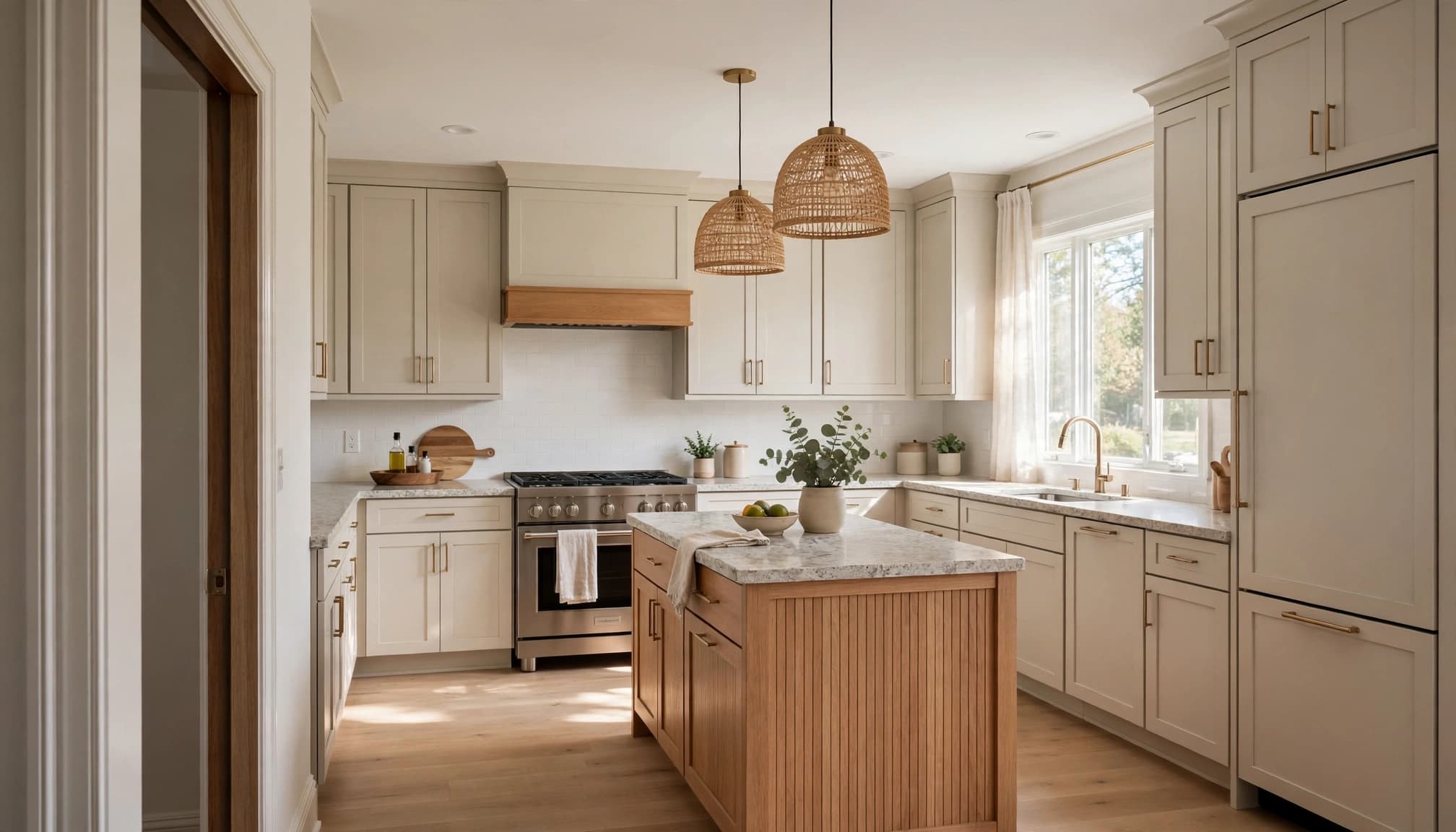
Why national figures differ
The 2025 Cost vs. Value Report lists $28,458 for a minor midrange kitchen remodel and $82,793 for a major midrange remodel.
Those benchmarks describe different project scopes. A major renovation includes much more work than a surface update, so its price shouldn’t be compared directly with a cosmetic refresh. Match your plans to the work behind the number.
Where your kitchen remodeling budget goes
Materials are only part of the total. Your estimate should also identify installation, preparation, and any supporting construction.
Cabinets, countertops, and appliances
Stock cabinets usually cost less upfront than custom cabinetry, but the cabinet boxes aren’t the complete purchase. Fillers, finished panels, hardware, delivery, and installation all affect the bill. Comparing custom and stock cabinets helps you weigh fit and storage against price.
Countertops also change the total. Laminate and natural stone involve different material and installation requirements. Cutouts, edge details, and seams add complexity.
Meanwhile, appliance choices can affect surrounding work. A different refrigerator size or cooking setup may require cabinet adjustments, electrical work, or ventilation changes.
Labor, plumbing, electrical work, and permits
Ask estimates to distinguish material purchases from installation labor where practical. Otherwise, a lower cabinet price can hide a higher installed cost.
Moving a sink, gas connection, or electrical fixture generally requires more work than replacing it in place. Skilled trades also handle code-required improvements that decorative upgrades don’t address.
Depending on the project and local requirements, the budget may include permits, inspections, demolition, and disposal. These aren’t optional extras when the work requires them.
What can make a kitchen remodel cost more or less?
Scope, kitchen size, and location
Larger kitchens usually need more cabinetry, countertops, and flooring. However, size alone doesn’t determine the kitchen remodel cost. A compact kitchen with extensive utility changes can require substantial work.
Location affects labor rates and delivery expenses. Material availability matters, too: delays or substitutions can disrupt installation schedules.
Existing conditions add another variable. Removing cabinets or opening walls may reveal water damage, outdated wiring, or plumbing problems. Those discoveries can add work and time before installation resumes.
Set aside money for surprises
Keep a contingency reserve separate from planned purchases. Ultimate Cabinets‘ Southwest Florida kitchen cost guide recommends setting aside 10% to 15% for unexpected issues in that regional market.
Older homes and uncertain conditions deserve extra caution when setting the overall spending limit. Avoid committing every available dollar before demolition starts.
The reserve covers unexpected work. If you already want upgraded appliances or a stone backsplash, include them in the base budget instead.
How to plan a kitchen remodel you can afford
Compare detailed written estimates
First, establish your maximum total spending, including the contingency reserve. Then rank must-haves before choosing finishes.
Request itemized written estimates based on the same scope. Compare cabinet specifications, countertop materials, installation, demolition, permits, and disposal. Also identify exclusions, allowances, payment schedules, and how contractors price changes.
An allowance is a budget placeholder, so a low allowance can make an estimate appear cheaper than your selections will allow. Review contractor licensing, insurance, and references as part of hiring.
Ultimate Cabinets’ kitchen remodeling planning guide is another resource for homeowners exploring cabinetry and kitchen design.
Save money without cutting corners
Keeping the existing layout can reduce plumbing and electrical changes. If cabinet boxes remain sound and the storage works, repainting or refacing may make sense instead of replacement.
Choose durable midrange materials that suit daily use. For example, spending more on a finish doesn’t automatically solve a storage problem.
Finalize appliance dimensions and material selections before installation begins. Late changes can create extra orders and repeat labor.
Protect the parts of the budget that support reliable results: proper installation and required safety work. Savings elsewhere shouldn’t come at their expense.
Build Your Budget Around the Work You Need
Kitchen remodel costs depend most on scope, materials, labor, and location. National figures help establish expectations, but an itemized estimate connects those expectations to your kitchen.
Compare proposals for equivalent work and keep a separate contingency reserve. Choose upgrades that address how you cook and use the room, then keep those choices within your spending limit. A useful budget leaves room to finish the project properly.