
Closet Design Trends 2026: Warm, Practical Storage
A closet can look full and still leave you searching for a shirt every morning. The closet design trends for 2026 favor warm finishes, better lighting, and storage shaped around what you own.
For homeowners, the useful shift is toward visibility and access, with personal details that make storage feel connected to the bedroom. You don’t need a large walk-in or a complete renovation to borrow these ideas.
Start with the main design changes, then choose the finishes and features that suit your space, daily routine, and budget.
Key Takeaways
- Warm wood tones and muted colors give closets a more finished look without overwhelming nearby rooms.
- Layered lighting improves visibility, while glass fronts work best for selected displays.
- Adjustable shelves and dedicated storage zones accommodate changing wardrobes.
- Measure carefully and prioritize useful upgrades before spending on custom details or decorative features.
Closet design trends 2026 bring warmth and a more finished look
The visual direction feels closer to bedroom furniture than utility shelving. However, a polished closet should still make clothing easy to find and put away.
Natural wood tones and soft colors replace stark all-white closets
Warm oak tones, walnut-look finishes, and creamy neutrals offer alternatives to bright white. Houzz’s emerging home design trends report rising interest in wood elements and warm metals across home interiors.
For a closet, pair wood-grain shelves with soft beige walls or muted green drawer fronts. Keep the palette connected to your bedroom, especially when the closet remains visible through an open doorway.
Also, choose finishes you can live with beyond this year’s inspiration photos. Samples viewed beside existing flooring help reveal clashing undertones.
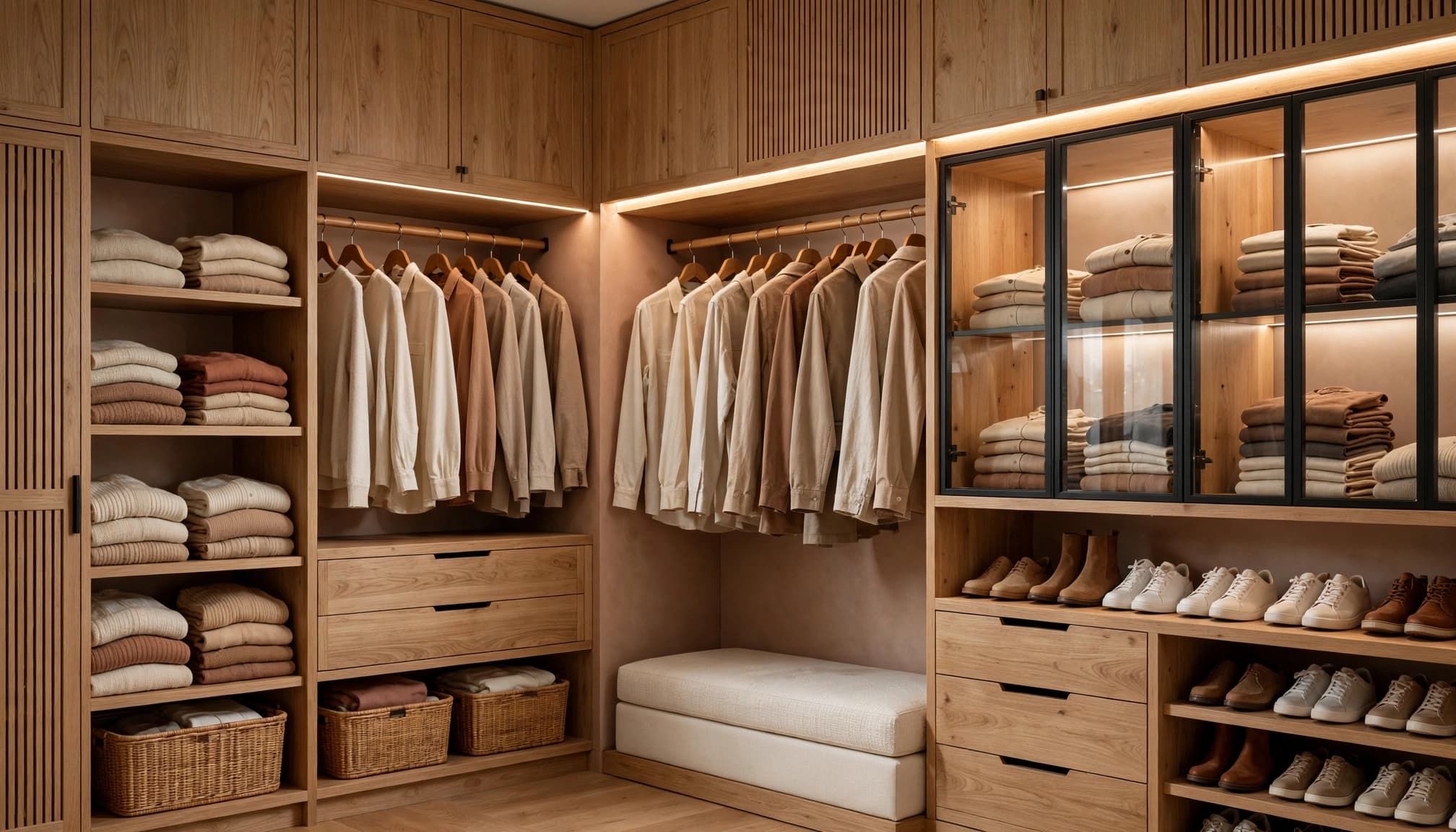
Layered lighting and glass details make the space feel polished
An overhead fixture can leave shelves and hanging sections in shadow. Add task lighting where you choose outfits, plus motion-sensor LEDs for convenient access.
Illuminated shelves can highlight bags or shoes, but every shelf doesn’t need a glow. Concealed fixtures keep the light source out of your direct view.
Similarly, glass-front cabinets suit a small display section. Use solid doors or drawers for laundry and personal items that would otherwise create visual clutter.
Smarter closet storage makes every inch easier to use
Useful storage starts with the wardrobe, not the cabinet catalog. A compact reach-in may benefit more from better shelf spacing than additional compartments.
Adjustable shelving and drawers adapt as needs change
Adjustable shelves let you change the layout when your belongings change. For example, shelf space that once held stacked sweaters can later accommodate taller bags without replacing the cabinet.
Drawer dividers separate socks and accessories, while pull-out baskets keep loose items contained. Choose components around actual habits: folded clothing needs different storage than long dresses or jackets.
Keep frequently used items within comfortable reach. Meanwhile, reserve higher shelves for seasonal belongings so daily storage remains accessible.
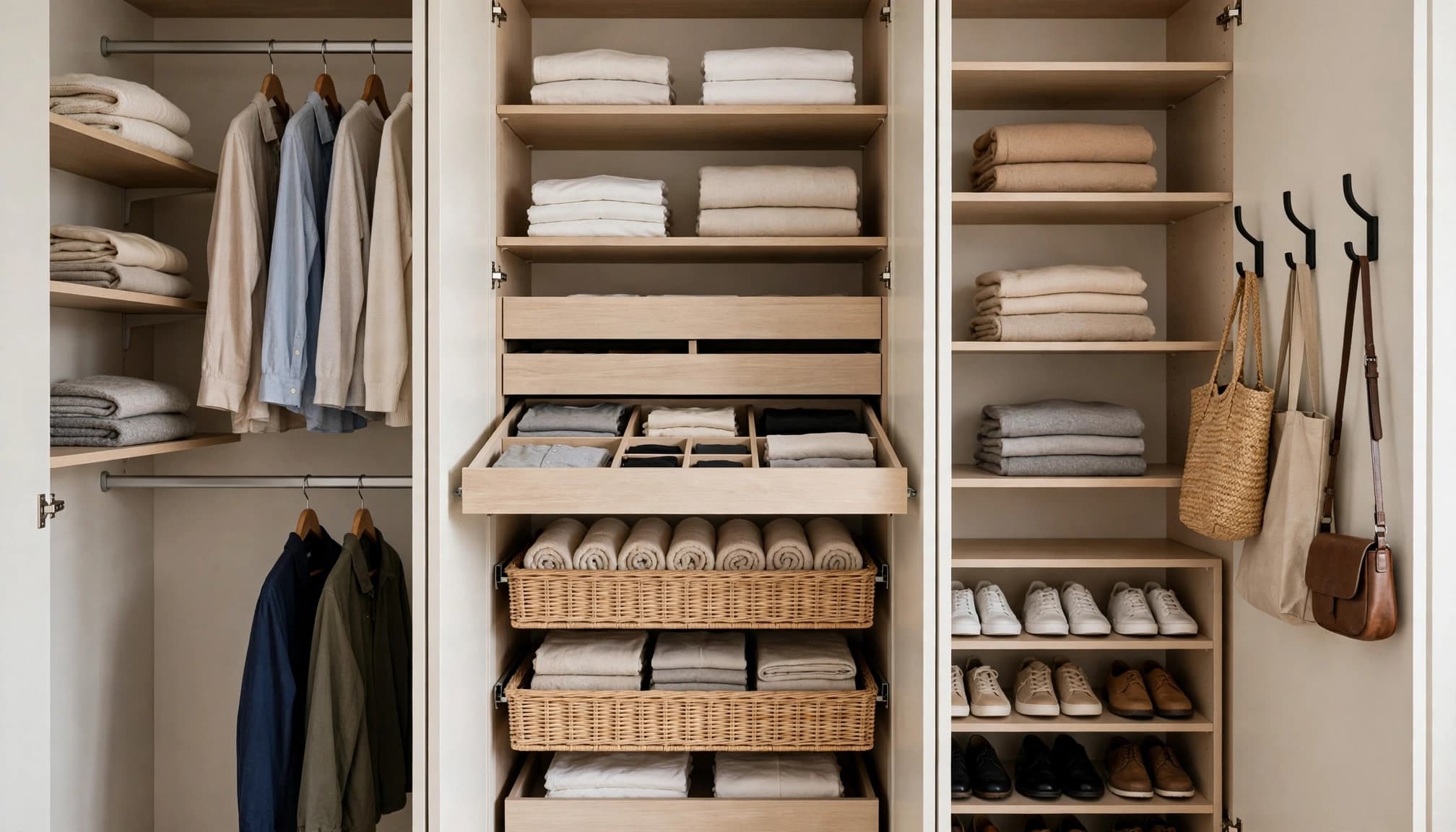
Built-in organization keeps shoes, bags, and accessories within reach
Dedicated shoe shelves prevent overlapping rows that hide pairs. Shallow accessory trays help separate smaller pieces, and hooks give frequently used bags a predictable home.
Double-hang sections work for shorter garments, while coats and dresses need uninterrupted hanging space. Leave enough room to remove hangers without catching neighboring clothes.
Built-ins work best alongside simple closet organization habits. Give everyday items easy-to-reach homes so putting them away takes little effort.
Clear access matters more than filling every wall. Extra cabinetry loses value when doors collide or drawers can’t open fully.
How to choose 2026 closet ideas that fit your home
Treat trends as options rather than a shopping list. The right choices solve your storage problems without creating new obstacles or unnecessary expenses.
Start with your space, routine, and storage priorities
Measure the closet’s width, depth, and height, then record door openings and existing room features. Include baseboards, outlets, and anything that could interfere with cabinetry.
Next, sort your belongings by storage type. Count hanging garments, folded stacks, shoes, and bags instead of estimating everything as general clothing storage.
Ultimate Cabinets’ guide to planning a walk-in closet also starts with dimensions and user needs. Plan clearances around open drawers and doors before selecting finishes.
When reviewing closet layout photos, focus on usable access rather than display alone.
Set a budget before choosing custom features
A basic refresh might combine improved lighting, shelf adjustments, and drawer organizers. Built-ins, glass fronts, and specialty pull-outs add materials and installation work, so prioritize features you’ll use daily.
Ready-made components offer fixed sizes and fewer layout choices. Custom cabinetry allows a closer fit around unusual dimensions and specific belongings.
Homeowners exploring cabinet and closet design options can consider Ultimate Cabinets and its custom closet designs. Compare materials, installation scope, hardware, and warranty terms across proposals.
Separate useful upgrades from decorative extras before committing. Better hanging space may deserve the budget before illuminated display shelves.
Choose a Closet That Works Beyond 2026
The strongest closet design trends for 2026 pair a warm, personal look with storage that supports daily life. Good lighting and thoughtfully placed shelves can matter more than an elaborate showroom layout.
Choose a few lasting ideas, measure carefully, and plan around your own belongings. A closet earns its place through everyday usefulness, especially when finding an outfit and putting laundry away both become easier.